
From Helpdesk to Red Team: The Path Nobody Tells You About
Everyone wants to start in offensive security. Almost nobody does. The most reliable route to a red-team seat runs through the helpdesk, the SOC, and the systems you first learned to fix — and here is why that is an advantage.

In this article
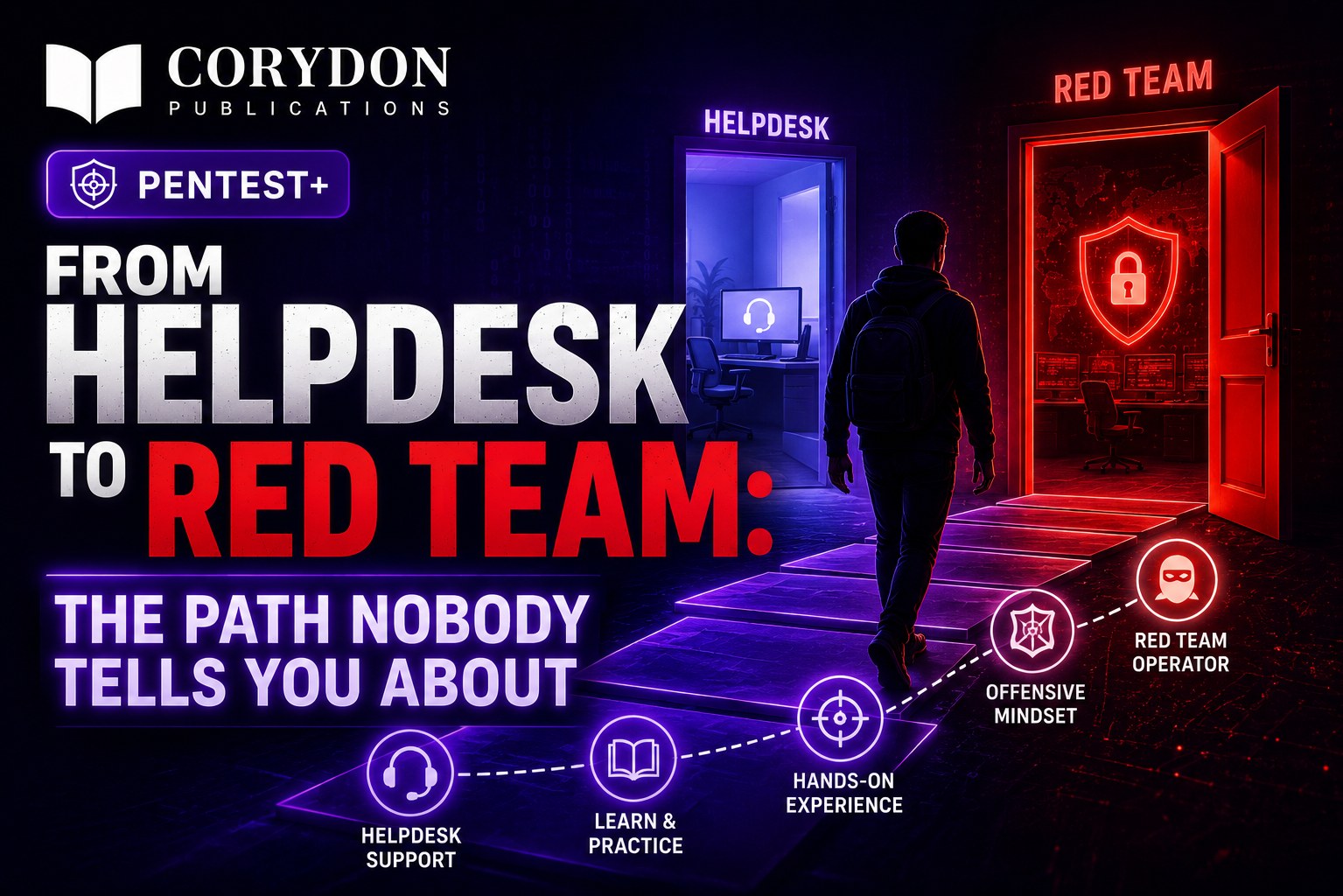
Search for how to get into offensive security and you will find a thousand people who want to start there and very few who actually did. The fantasy is that you learn some hacking, pass a certification, and land a red-team job. The reality, for almost everyone who makes it, is quieter and more roundabout: they started on the helpdesk, or in system administration, or in a security operations centre, and they got good at defending and running systems before they ever got paid to break them.
This is not a detour. It is the path, and the people who understand that it is the path — rather than an obstacle in the way of the "real" job — are the ones who arrive with the deep, practical foundation that makes a genuinely good tester. Here is why the unglamorous start is the best possible preparation for the exciting finish.
The overnight-hacker myth
The myth says offensive security is a distinct skill you can learn in isolation, bypassing the "boring" foundational work. It is seductive because it promises a shortcut. And it is wrong, because you cannot skilfully attack systems you do not deeply understand. To find the flaw in how a Windows network authenticates users, you have to understand how it authenticates users — which you learn by administering one, not by watching a hacking tutorial.
The testers who tried to skip the foundation tend to plateau. They can run tools and follow known procedures, but they struggle the moment they meet something unfamiliar, because they never built the underlying model of how systems actually work. The ones who came up through operations have that model in their bones, and it is the difference between someone who can run an attack and someone who can invent one.
Why the boring jobs are the foundation
Every foundational role teaches something an attacker needs, and teaches it more thoroughly than any course could.
| Starting role | What it teaches the future attacker |
|---|---|
| Helpdesk | How real systems break, how users behave, how support processes can be socially engineered |
| System administration | How networks, servers and directories are actually built — and misconfigured |
| Networking | How traffic really flows, where trust boundaries are, how segmentation is meant to work |
| Security operations (SOC) | What attacks look like from the defender's side — invaluable for staying quiet |
Notice how directly each of these feeds offensive skill. The helpdesk teaches you how support desks can be talked into resetting a password — a social-engineering goldmine. The SOC teaches you exactly what defenders see, which is precisely the knowledge you need to move without being caught. Nothing about these roles is wasted; every one of them is offensive-security training disguised as a day job.

A realistic path
The honest route looks less like a leap and more like a climb, and it typically unfolds over years, not months.
You start in a foundational IT role and get genuinely good at it — understanding, not just doing. You move toward security, perhaps into a SOC or an analyst role, learning to recognise attacks. You take on adjacent work like vulnerability management that sits between defence and offence. And from there the step into a junior offensive-security role is short, because you arrive already understanding systems, networks, defenders, and users. You are not starting from zero; you are applying years of foundation to a new angle.
Where certifications fit
Certifications matter on this path, but as accelerators and signals, not shortcuts. A foundational certification like A+ formalises the systems knowledge you are building early on. A security certification like PenTest+ proves you understand the offensive discipline when you are ready to make the move, and — because it covers scoping, methodology and reporting, not just exploitation — it signals to an employer that you understand the whole professional job, not just the exciting part.
A certification gets your CV past the filter and into the interview. The years of foundational experience are what let you answer the interviewer's hard questions and, later, actually do the job well. You need both, in that order — the paper opens the door, the experience earns the seat.
So if you are staring at a helpdesk job wondering whether it is a dead end on the way to the red team, reframe it entirely. It is not the thing delaying your offensive-security career — it is the first and most important part of it. Get good at understanding how systems work and break and get defended, layer the right certifications on top at the right moments, and the path to offensive security opens naturally. The people already doing the job you want almost all took this route. The route is not the obstacle. The route is the answer.
What the roundabout path gives you that a shortcut cannot
There is a quality the operations-first testers have that the shortcut-seekers rarely do, and it is hard to fake: intuition about how real systems behave. When you have spent years watching things break in the messy, non-textbook ways that real environments produce, you develop a feel for where the weaknesses hide — the forgotten server, the over-privileged service account, the legacy box everyone is afraid to patch. A tester without that background sees a network diagram; a tester who came up through operations sees all the places the diagram is lying, because they have personally maintained systems that did not match their own documentation. That intuition cannot be taught in a course or crammed for an exam. It is deposited, slowly, by every incident you resolve, every misconfiguration you inherit, every 2am outage you fix. So the years on the helpdesk and in the SOC are not time spent waiting to become a hacker. They are the time in which you quietly become the kind of person who will be a genuinely dangerous one — in the professional, authorised, well-paid sense. The path feels slow only if you mistake the foundation for a delay. It is not a delay. It is the point.
If you are at the start of that climb, be patient with it and deliberate about it. Get genuinely good at each rung before reaching for the next, collect the certifications that formalise what you have learned, and trust that the foundation you are building is the thing that will one day make you formidable. The red team is not a door you kick down. It is a summit you climb to — and the view is better for having made the climb.
Bundle all three best-sellers and save up to $50
A+ Core 1, A+ Core 2 and PenTest+ in one order — $135 in paperback or $80 for all three ebooks. The cheapest route to both certifications.
See the bundle